Select your language from the drop down menu.


Council's Coordinator Environmental Sustainability, Dr Phil Roetman, says you can help reduce the pressure on rates when you go shopping by thinking ‘circular’.
"What does that mean?" says Dr Phil. "A ‘circular economy’ describes an economy where resources are used again and again, rather than being thrown away."
What does that have to do with shopping? "There are more and more products on supermarket shelves that have recycled content in them," says Dr Phil. "When you buy recycled materials, you are participating in the circular economy. Buying recycled goods also has environmental benefits because it reduces the need for raw materials."
It is easier than it sounds. Below are some examples of common items that are available at local supermarkets and online.
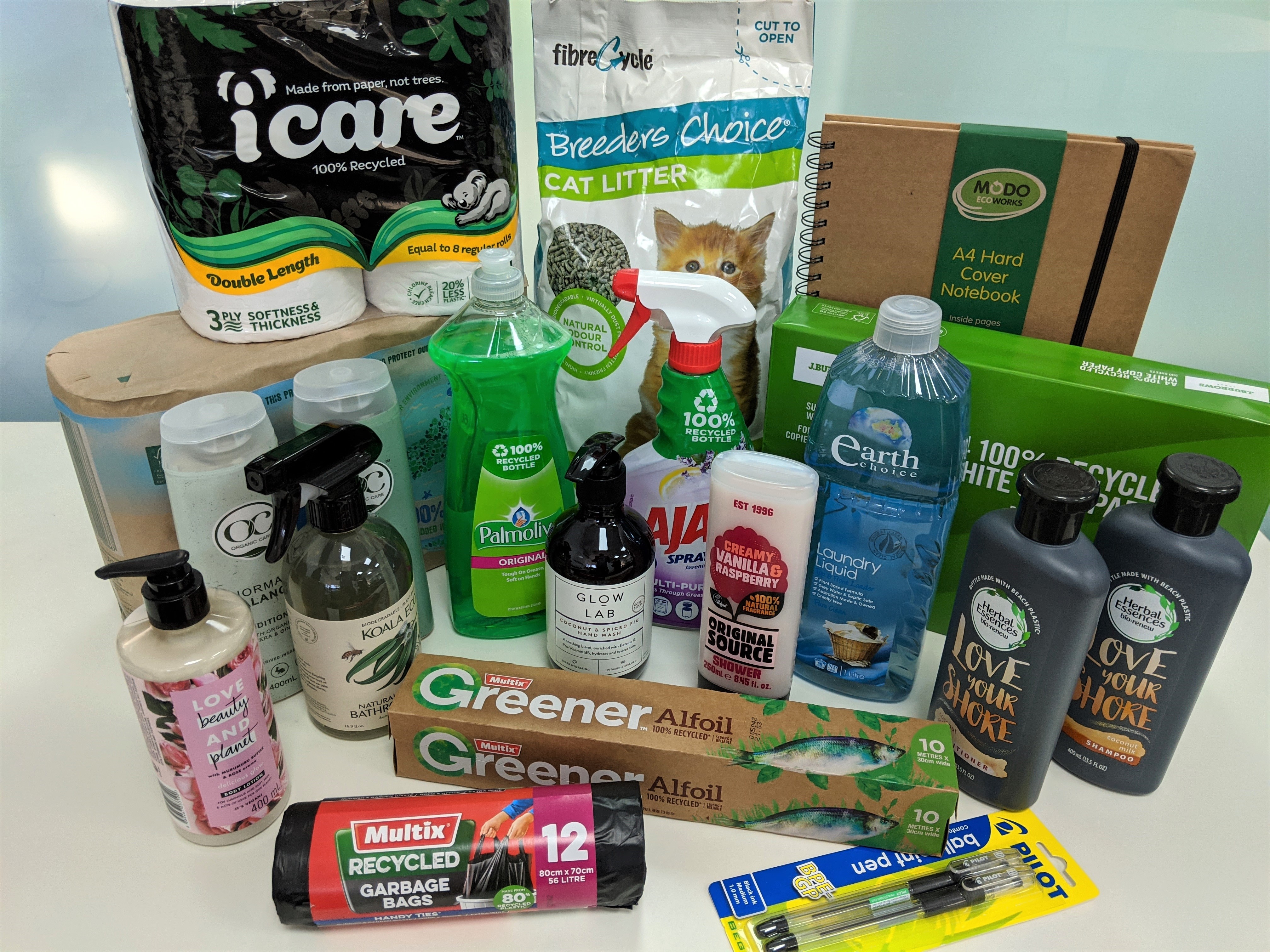
Personal care items:
Shampoo, conditioner and body wash with recycled plastic bottles
Cosmetics with recycled plastic containers
Toilet paper made from recycled paper
Cleaning Products:
Dishwashing and laundry liquid with recycled plastic bottles
Kitchen and bathroom cleaning products with recycled plastic bottles
Waste management:
Bin liners made from recycled plastic
Cat litter made from recycled paper
Food Storage:
Aluminium foil made from recycled aluminium
Food containers and drink bottles made from recycled plastic (available online)
Stationery:
Printing paper, notebooks and cards made with recycled paper
Pens made with recycled plastic
How does buying products with recycled content take pressure off council rates?
To explain this matter, we need to start at the bin.
Everything you put in a bin costs money to process. For example, when you put paper in a yellow bin it costs council to pick it up, transport it to a recycling facility, and separate it from other materials. Manufacturing companies then buy the paper and turn it into new products. The price that manufacturers pay for the paper can offset the cost of the processing. If the paper is sold to a manufacturer for $10 per tonne, but it cost $15 per tonne to collect and sort the paper, the overall process would be costing council ($5 per tonne in this example).
Lately, the value of recycled paper has been low, which means that the cost of the recycling process is not being completely offset. But the value of recycled paper does change, and if the value increases it would offset more of the processing cost. What would make this value increase? Greater demand. If there is more demand for a product, its value increases.
How can we create greater demand for recycled paper? We can all buy products made with recycled paper. As the demand increases, the value of the recycled paper will increase, and the sales of recycled paper to manufacturers will completely offset the costs of processing. The same is true for plastic, glass, metal and other recycled materials. The more recycled content we demand, the better. Dr Phil says we create demand for recycled materials when we buy them. "That is how we can all participate in the circular economy and help take the pressure off council rates."


Phone: 08 8366 4200
Email: burnside@burnside.sa.gov.au

We've launched a fresh new home for engage.burnside. To continue receiving updates and taking part in our engagements, please register here, even if you had an account with us before.
Once registered, you can receive updates straight to your inbox, and be among the first to have your say on upcoming projects.

